Global Child Survival
Saving children's lives
© UNICEF/HQ03-0037/Noorani
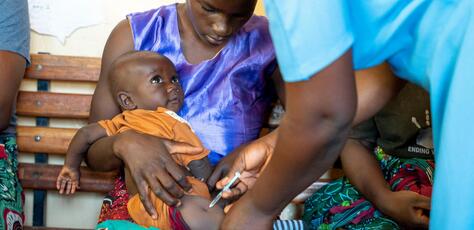
A baby in Iraq receives a dose of oral polio vaccine at a primary health center. UNICEF is a lead partner in the Global Polio Eradication which is responsible for dramatic progress since it formed in 1988. A disease which once crippled children in 125 countries is now endemic in only four—Nigeria, India, Pakistan and Afghanistan.
Every year, more than 10 million children under five die, four million in the first month of life. That is sad—but the real tragedy is that most of these deaths are from preventable and treatable diseases. Most children don't die from birth defects or incurable diseases—they die from diarrhea, pneumonia, malaria, measles, and other causes that are almost unheard of in our own country.
In 2000, the United States joined 188 other nations in pledging to reduce child deaths worldwide by two-thirds from 1990 levels by the year 2015. Sadly, most countries are not on track to meet this goal, and many poor countries are actually losing ground.
The good news is that we know how to save children's lives. Health experts estimate that at least six million child lives a year could be saved by ensuring access to low-cost, high-impact interventions. Such interventions are the basics of child survival—including immunizations, antibiotics, oral rehydration therapy, malaria prevention and treatment, better nutrition and breastfeeding, and improved neonatal care. It's important that children have access to all these interventions, not just one or two. For example, UNICEF implemented a project in parts of West and Central Africa to rapidly increase access to a package of health services. In three years, the project cut child mortality rates in target areas by an estimated 20 percent.
In poll after poll, Americans consistently voice their strong support for helping save children's lives in the world's poorest countries. With that support, the United States has played a key role in reducing the number of under-five child deaths by 50 percent over the past 40 years. Unfortunately, in recent years U.S. Government funding for and commitment to child survival has stagnated.
The Global Child Survival Act
In order to reestablish U.S. leadership in saving children's lives, our government needs to increase both the effectiveness and the scale of its child survival programs for children most at risk. The "United States Commitment to Global Child Survival Act of 2007" would help accomplish both those goals. The legislation would ensure that U.S. Government programs work together in a common strategy to cut child mortality rates, and authorizes increased funding to scale up those programs where children need them. This bill has been introduced with bipartisan support in both the U.S. Senate (S. 1418) and the House of Representatives (H.R. 2266).
Take Action Now
Write your U.S. Representatives and U.S. Senators and tell them you care about preventing the needless deaths of millions of children—and ask them to cosponsor the Global Child Survival Act!


Read the latest news about advocacy issues important to UNICEF on the