Child Rights

rights_030288E.jpg

©UNICEF/HQ03-0288/Asad Zaidi

In Pakistan, Najma, 7, raises her hand to answer a question in her second-grade class.  Article 28 of the Convention makes primary education "compulsory and free to all."

The United Nations Convention on the Rights of the Child (CRC)—the international treaty that protects children's rights—is the most rapidly and widely ratified human rights in history. To date 192 nations have ratified this important treaty. The only two UN member states that have not ratified the CRC are Somalia and the United States.

Families and governments protecting children together

Nations that ratify the Convention agree to respect and support the responsibilities, rights and duties of parents to provide direction and guidance for the development of their children. In addition, the CRC calls on governments to develop policies conducive to family and community environments that will allow children to grow up in an atmosphere of happiness, love and understanding.

The Convention sets forth basic norms and standards that individual nations agree to pursue on behalf of their children. The CRC's internationally recognized norms include:

  • Protection from violence, abuse and abduction
  • Protection from hazardous employment and exploitation
  • Adequate nutrition
  • Free primary education
  • Adequate health care
  • Equal treatment regardless of gender, race or cultural background.

How the Convention helps children

In many countries around the world, UNICEF and other child-focused organizations have used the CRC as an important tool to guide polices and programs that protect children:

  • In Rwanda, children were moved out of adult detention centers where they had been held for alleged war offenses, and transferred to special juvenile institutions where they were assigned lawyers to defend them.
  • In Belgium and Germany, laws inspired by the Convention extended the ability of national authorities to prosecute cases of child prostitution and pornography.
  • In Romania, CRC principles helped change adoption laws, guide training for magistrates to address juvenile delinquency, and reform the child protection system.
  • In Viet Nam, UNICEF uses the CRC to help the Ministry of Justice and non-governmental organizations to implement an appropriate judicial process for juveniles, as well as to train judges, police and other legal professionals on child-friendly policies in line with the Convention.
  • After ratifying the CRC, El Salvador, Peru and Bolivia all enacted new justice codes for children.

Campaign for U.S. Ratification of the CRC

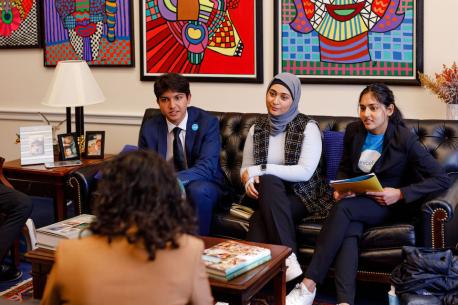
In May 2006, The Campaign for U.S. Ratification of the CRC held a summit at American University in Washington, DC. The event drew more than 300 citizens and students from across the country to discuss the importance of the CRC and strategies to advance U.S. ratification. For more information on this grassroots effort, please see the campaign website at www.childrightscampaign.org.

U.S. ratification of the CRC

Despite near-universal ratification of the CRC, in many places around the world, children still face discrimination, violence and abuse. U.S. ratification of the CRC would add a very powerful voice to help ensure that the world lives up to the standards stated in the Convention. Without U.S. ratification of the treaty, the U.S. Government is excluded from participation in evaluating, monitoring and advising other nations on how they treat their children.

Within the United States, the CRC would provide a set of principles and standards that can guide the work of federal, state and local governments to ensure that children's voices are heard, to fight exploitation and abuse, and to keep families strong.

Learn more about child rights

Take action now

Individuals and organizations in the United States that support the treaty must make a considerable effort to educate their fellow citizens about the importance of U.S. ratification of the CRC.

For example, individuals can organize informational meetings and distribute materials about the CRC; work with local churches, schools and community groups to create grassroots support; and contact local newspapers with letters to the editor and op-eds in support of U.S. ratification of the CRC.

Organizations can help by educating their staff and members about the Convention; discussing the CRC in newsletters and membership magazines; sending informational mailings to members; including the CRC as an issue at annual meetings; getting field offices involved; and officially endorsing U.S. ratification of the Convention.


print icon | send icon

del.icio.us | Digg | Reddit | Facebook | Stumble Upon

For more information

Contact the U.S. Fund's Office of Public Policy and Advocacy:

U.S. Fund for UNICEF/OPPA
1775 K Street, N.W., Suite 360
Washington, DC 20006
202.296.4242
OPPA@unicefusa.org  

Advocacy Handbook

pdf_icon.gifDownload our Advocacy Handbook. It's filled with useful information about contacting your legislators on UNICEF's behalf.

one_logo.gif

The U.S. Fund for UNICEF is a proud member of ONE, which supports the Global Child Survival Act.  For more information on the ONE Campaign, see one.org.